In the solar street lighting market, wattage ratings can be inflated, and lumen claims exaggerated. If you're a savvy buyer seeking a product that will truly last 5–7 years and stay lit during rainy days, skip the flashy marketing claims and go straight to the datasheet. Focus on scrutinising these three technical details that manufacturers won't voluntarily disclose.
Detail 1: Check the Lineage and Voltage Platform of the Battery.
(This is the heart of the lamp and determines whether it lasts seven years or just seven months.)
Many inexpensive solar streetlights on the market use lead-acid or ternary lithium batteries. These batteries are sensitive to heat and have a relatively short lifespan of typically only 500 charge cycles.
💡 Expert Selection Criteria
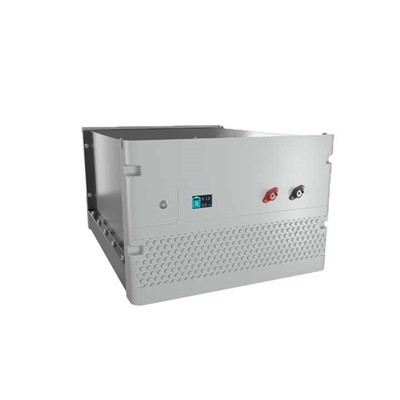
Make sure you choose LiFePO4 (lithium iron phosphate) batteries. This chemical composition offers high heat resistance, exceptional safety, and a cycle life of over 2,000. Additionally, low-voltage systems (e.g., 3.2 V) offer greater safety advantages than traditional 12 V systems.
🔍 Blue Carbon's field test data: Blue Carbon pioneered the 3.2V solar streetlight system within its technical framework.
- Chemical composition: All products come with LiFePO₄ (lithium iron phosphate) batteries as standard.
- Core advantages: This battery can be discharged to a depth of up to 95%, meaning it stores more energy and can be discharged almost completely without sustaining damage, offering an exceptionally high safety factor. Compared to conventional batteries, it delivers superior endurance, outstanding performance at high and low temperatures, and an extremely long cycle life.
Detail 2: Solve a Maths Problem Involving the 'Solar Panel Ratio'.
(It is the appetite that determines whether the battery can be fully charged.)
Many retailers bundle a large battery with a small solar panel, which seems generous. The result? It's like a small horse pulling a heavy cart - the battery never fully charges. If consecutive rainy days occur, the lights will go out overnight.
💡 Expert Selection Criteria
A quality streetlight should have solar panels that generate more power than the battery capacity on an average day with 5 hours of sunlight. This ensures a rapid recharge, even on days with insufficient sunlight.
🔍 Blue Carbon's Actual Parameter Testing (Using the King Light 3.0 Model as an Example): Let's see how the BCT-OLK3.0 model from Blue Crystal Easy Carbon solves this mathematical problem.
- Solar panel: 5V/160W (monocrystalline).
- Battery capacity: 3.2 V/160 Ah (equivalent to 512 Wh).
- Calculation: A 160 W panel requires only 3.2 hours (512 Wh ÷ 160 W) to fully charge an empty battery in standard sunlight conditions.
- Conclusion: This is a classic example of 'over-engineering'. Even on cloudy days with only 60% of normal sunlight, the battery can be fully charged. This is precisely why the slogan "Lighting up the way home" is so fitting.
Detail 3: Consider the 'hidden costs' of connectors and lenses.
(It is the details that determine light efficiency and failure rates.)
Streetlights are constantly exposed to the elements, so it is often not the LED bulbs themselves that fail first, but rather poor connections caused by oxidised connectors or reduced brightness due to yellowed lenses.
💡 Expert Selection Criteria
Avoid exposed copper wire connections and substandard plastic lampshades.
🔍Blue Carbon's Craftsmanship Details
Flip through the spec sheet, and you'll discover two high-cost details that are easily overlooked.
- Gold connections: The entire series uses gold-plated plugs. The exceptional conductivity and oxidation resistance of gold ensure that connections remain functional even after years of exposure to the elements, preventing 'blind spots' caused by oxidation-induced circuit breaks.
- Light transmission: It features PC outdoor optical lenses. This material boasts over 93% light transmission, providing brighter illumination whilst resisting ageing. Unlike inferior plastics, it will not yellow or become brittle with age.


Brand Scale
- R&D capabilities: Investing 20% of annual revenue in new product development and holding over 100 patent certificates.
- Manufacturing scale: We operate 23 Industry 5.0 factories, with an annual PV module production capacity of 2 GW.
- Global Reach: Our sales networks span over 100 countries and regions worldwide and are supported by over 100 regional warehousing centres to ensure rapid service.
Conclusion
If you're looking for a supplier that stands out for its technical reliability rather than low prices, Blue Carbon's strengths are clear: its combination of lithium iron phosphate batteries, a 3.2V system, and a gold-plating process addresses the industry issues of solar streetlights, namely their short lifespan and inability to illuminate during cloudy or rainy weather.