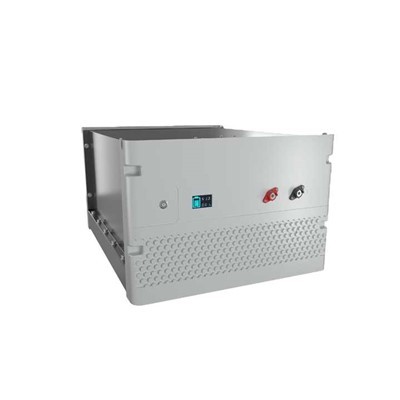
Rechargeable lithium ion batteries are the most widely used batteries in modern digital products such as mobile phones and laptops, but they are "delicate" and cannot be overcharged or overreleased (which will damage the battery or make it useless) during use. Therefore, there are protective components or protective circuits on the battery to prevent expensive battery damage. Lithium ion battery charging requirements are very high, to ensure the termination voltage accuracy within ±1%, major semiconductor device factories have developed a variety of LITHIUM ion battery charging IC, in order to ensure safe, reliable, fast charging large capacity lithium battery.
Cell phones basically use lithium-ion batteries. Proper use of lithium-ion batteries is very important for extending battery life. It can be made into flat rectangles, cylinders, rectangles and buttons according to the requirements of different electronic products, and has several batteries in series and in parallel. The rated voltage of the lithium ion battery, due to the change in the material, is generally 3.7V and 3.2V for the positive electrode of lithium iron phosphate (hereinafter referred to as ferrophosphorus). When fully charged, the terminal charging voltage is generally 4.2V and ferrophosphorus 3.65V. The termination discharge voltage of lithium ion battery is 2.75V ~ 3.0V(the battery factory gives the working voltage range or the termination discharge voltage, the parameters are slightly different, generally 3.0V, 2.5V phosphorus iron). Continued discharge below 2.5V (ferric phosphorus 2.0V) is called overdischarge, which can damage the battery.