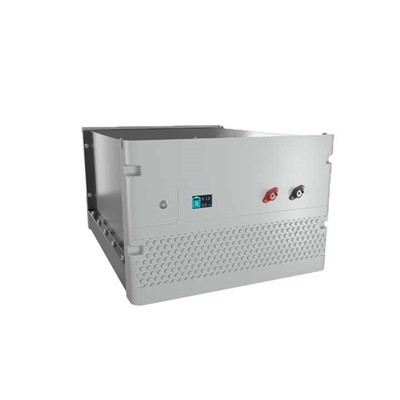
The anode of a lithium-ion battery is usually made of lithium's active compounds, while the cathode is a special molecular structure of carbon. The main component of the common anode material is LiCoO2. During charging, the electric potential added to the battery poles forces the anode compounds to release lithium ions and embed them into the carbon with the laminar structure arranged by the cathode molecules. When discharged, the lithium ions are pulled out of the lamellar carbon and reattached to the positive compound. The movement of lithium ions creates large capacity lithium batteries.
Although the chemical reaction principle is very simple, however, in the actual industrial production, there are many more practical problems to be considered: the positive electrode material needs additives to maintain the activity of multiple charging, and the negative electrode material needs to be designed at the molecular structure level to accommodate more lithium ions; In addition to maintaining stability, the electrolyte filled between positive and negative electrodes needs to have good electrical conductivity to reduce the internal resistance of the battery.
Although lithium-ion batteries have few of the memory effects of nickel-cadmium batteries, which work by crystallization, they rarely produce such a reaction in lithium-ion batteries. However, the capacity of lithium-ion batteries will still decrease after multiple charging and discharging. The reasons are complex and varied. It is mainly the change of anode and cathode materials themselves. From the molecular level, the cavity structure containing lithium ions on anode and cathode will gradually collapse and become blocked. From a chemical point of view, it is the active passivation of the anode and cathode materials, which results in side reactions and produces stable other compounds. In physics, there will also be gradual peeling of the positive electrode material, which ultimately reduces the number of lithium ions in the battery that can move freely during charging and discharging.