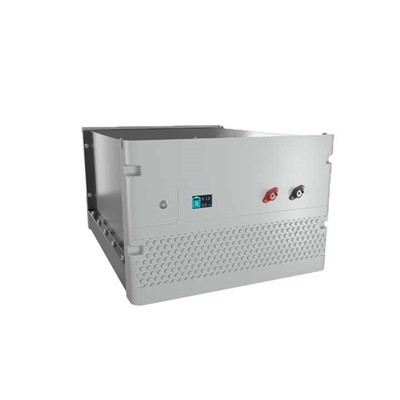
The global energy transition and the pursuit of carbon neutrality have led to significant advancements in the hybrid inverter market, which is poised for rapid growth. According to projections, global demand for energy storage inverters is set to reach 16.0572 million units by 2027, with the market size expected to reach 112.991 billion yuan.
In the current era of rapid growth in the renewable energy sector, inverters – as core system components – are driving technological advancements that significantly expand the application boundaries of clean energy. Hybrid inverters have evolved from the single-function capabilities of traditional inverters, with innovative features such as bidirectional charging/discharging, multi-energy coordination, and intelligent control.
This evolution delivers more flexible and reliable power solutions for business-to-business customers. As a manufacturer of photovoltaic new energy products, we are committed to meeting diverse energy demands across a range of scenarios. Hybrid inverters have become a crucial component in our product line, particularly in areas such as photovoltaic storage systems.
What Is a Normal Solar Inverter?
A normal solar inverter is a unidirectional power conversion device that transforms direct current (DC) into alternating current (AC). Normal solar inverters are primarily designed to convert the direct current (DC) electricity generated by photovoltaic panels into alternating current (AC) power that is compatible with the grid. However, their functionality is limited. These systems have been tailored specifically for solar panels, but they lack energy storage management capabilities and perform inadequately in scenarios involving grid instability or requiring backup power sources.
Technical Features
- Designed to support unidirectional DC-to-AC conversion.
- This component is a popular choice in grid-tied (on-grid) systems.
- Should there be excess solar power, it can be exported to the grid.
- The system is dependent on a reliable public grid.
- It is not designed for direct connection to batteries.
Applicable Scenarios
- Systems connected to the residential grid
- Commercial rooftops are equipped with reliable grid access, ensuring a consistent and predictable energy supply.
- The primary objective of the project is to reduce electricity bills, rather than to provide energy backup.
What Is a Hybrid Inverter?
A hybrid inverter is a power conversion device that integrates multiple inverter technologies. This device is capable of converting direct current (DC) power into alternating current (AC) power, as well as enabling reverse charging of batteries. The combination of different types of inverter technology, integrated and optimised by an intelligent controller, allows for bidirectional power flow and multi-energy coordination.
Technical Features
- Can convert direct current to alternating current and manage battery charging/discharging.
- It is suitable for both grid-connected and off-grid operation.
- The intelligent mode switching function allows you to prioritise grid power or PV power as required.
- Designed to provide backup power in the event of a power outage.
- The role involves the management of battery energy storage, as well as participation in grid peak shaving activities, such as peak shaving and valley filling.
Applicable Scenarios
- Microgrids and off-grid solar systems, as well as commercial and industrial energy storage projects, are all areas of expertise within our field.
- In areas where the electrical grid is unstable, or electricity rates are high (for example, in factories or hospitals), it is recommended that batteries be used to ensure a continuous power supply during periods of outage.
- In regions where electricity is priced according to time of use, it is recommended that the charge from the grid is made during off-peak hours and that power is drawn from batteries during peak periods, with a view to reducing electricity costs.
- Critical facilities, including data centres and communication base stations, require a backup power supply to ensure uninterrupted electricity.
Key Technical Parameters Comparison
| Characteristics | Hybrid Inverter | Normal Inverter |
|---|---|---|
| Conversion efficiency | 97.4%-98.2% | 90%-95% |
| Flow of electrical energy | Bidirectional (Charge/Discharge) | Unidirectional (DC → AC) |
| Grid Adaptability | Supports low-voltage ride-through capability for stable operation under weak grid conditions. | Relies on a stable power grid; prone to instability under weak grid conditions |
| Switching time | Off-grid switching < 10 ms | Typically >50ms, with some reaching up to 100ms |
| Voltage Range | Wide voltage adaptation (e.g., 150-550V battery range) | Narrower voltage range |
| Certification Standards | Multiple country certifications (VDE, G99, CE, etc.) | Basic certification (e.g., IEC 61000) |
| Overload capacity | ≥110%-150% | ≤100% |
Product Innovation and Solutions
Our newly launched hybrid grid-tied inverter has been developed based on a deep understanding of B2B customer needs and a grasp of technological trends.
- This product is equipped with multi-MPPT tracking technology, which enables it to manage three energy sources simultaneously: solar PV, energy storage, and utility grid power.
- This product is equipped with built-in WiFi monitoring and CAN/RS485 communication capabilities, delivering real-time system insights and seamless BMS integration.
- This solution provides stable and efficient energy for residential, commercial, and off-grid hybrid applications.


Clean energy solutions for a stable power supply to B2B customers
Hybrid inverters represent the technological advancement direction in the photovoltaic new energy sector. Through innovative features such as bidirectional charging and discharging, multi-energy coordination, and intelligent control, they overcome the functional limitations of traditional inverters in complex scenarios.
For B2B clients, hybrid inverters not only enhance system efficiency and reduce electricity costs but also provide reliable backup power during grid instability, ensuring the continuous operation of critical equipment.
We specialize in delivering implementable clean energy solutions for stable power supply to B2B clients, covering diverse applications including photovoltaic storage and charging systems, water systems, DC systems, and lighting. Through continuous technological innovation and proven case studies, we have successfully assisted numerous enterprises in achieving energy transitions, reducing operational costs, and enhancing environmental sustainability.
Contact Us
If you're seeking a clean energy solution tailored to your business or wish to explore how our hybrid grid-tied inverters can meet your specific requirements, please submit your inquiry. We'll provide expert technical support and customized solutions. Let's advance together toward a more efficient, reliable, and sustainable energy future!